The AI Org Chart Revolution: Why Hierarchies Slow Business
AI is exposing the limits of traditional org charts. Learn why hierarchies slow decisions and how leaders can redesign structure for speed.
AI delivers value only when humans, data, and technology are designed to work as a system. This framework explains how those elements interact to create sustained impact, not isolated automation.

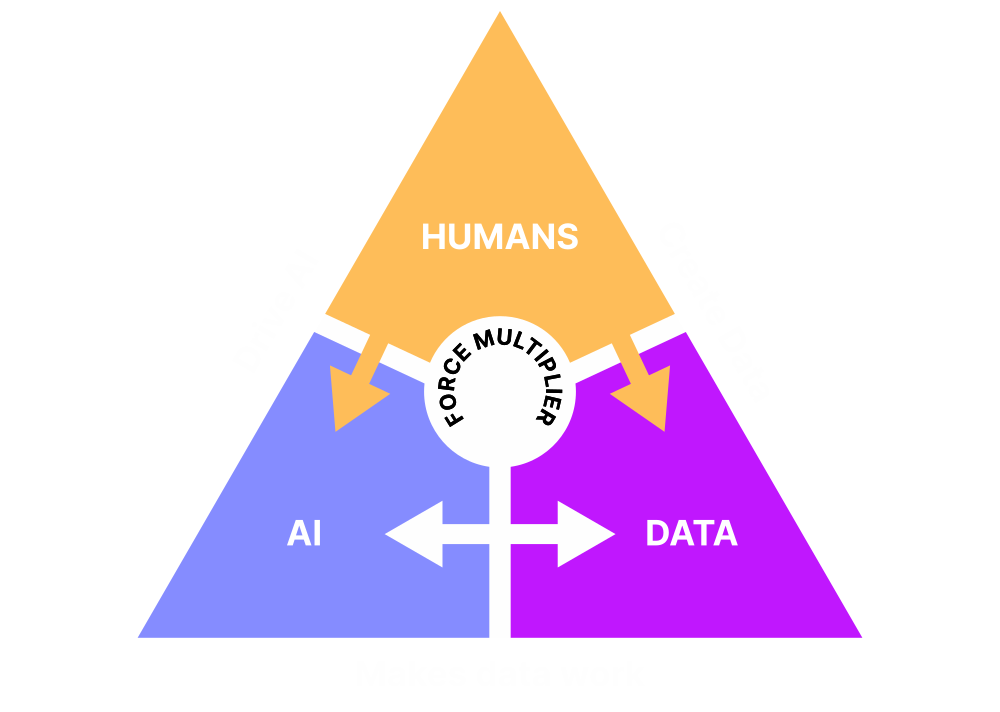
Humans provide intent, judgment, and accountability. They define purpose, set direction, and decide where AI should be applied. Without clear ownership and decision rights, AI activity becomes fragmented and tactical.
In the animation, Humans sit at the apex to reinforce leadership, governance, and responsibility.
Data is the raw material. Its quality, structure, and accessibility determine what AI can realistically deliver. Poor data produces confident but unreliable outputs, regardless of the model used.
The framework shows Data as something that must be deliberately created, governed, and maintained, not simply harvested.
AI connects intent to execution. It processes data at scale, surfaces patterns, and accelerates decisions, but it does not define value on its own. AI only works when embedded into real workflows and operating models.
The animation shows AI and Data in constant exchange to reflect this dependency.
When Humans direct AI and AI creates usable Data, the system compounds. Decisions improve, feedback loops shorten, and capability grows over time. This is the force multiplier effect.
The central element reinforces that value emerges from alignment, not from any single component.
Most organisations try to layer AI onto existing structures. This framework starts earlier by redesigning how information flows, how decisions are made, and how accountability is set. The result is AI that scales responsibly and delivers measurable outcomes.

Blog
AI is exposing the limits of traditional org charts. Learn why hierarchies slow decisions and how leaders can redesign structure for speed.